ELUCIREMTM (gadopiclenol) injection is indicated in adult and pediatric patients, including term neonates for use with magnetic resonance imaging (MRI) to detect and visualize lesions with abnormal vascularity in the central nervous system (brain, spine, and associated tissues), and the body (head and neck, thorax, abdomen, pelvis, and musculoskeletal system).
Discover the Future of MRI
ELUCIREM™(gadopiclenol) injection is the next-generation gadolinium-based contrast agent
(GBCA) from Guerbet, designed to reveal high-quality images at half the conventional
gadolinium dose.¹
Innovation that Illuminates
Gadopiclenol, the active drug substance of Elucirem™, has been designed to enable twice as much water molecule interaction, resulting in the highest relaxivity among all non-specific GBCAs.¹ This allows clinical use at half the conventional gadolinium dose to reveal high quality MR images.
In Phase III clinical studies, ELUCIREM demonstrated an efficacy profile comparable to gadobutrol, supporting diagnostic confidence.2,3 In these same studies, ELUCIREM also demonstrated a safety profile comparable to gadobutrol, with no cases of nephrogenic systemic fibrosis reported in the clinical trials.2,3
News
The Latest on ELUCIREM™
The Latest on ELUCIREM™
Image
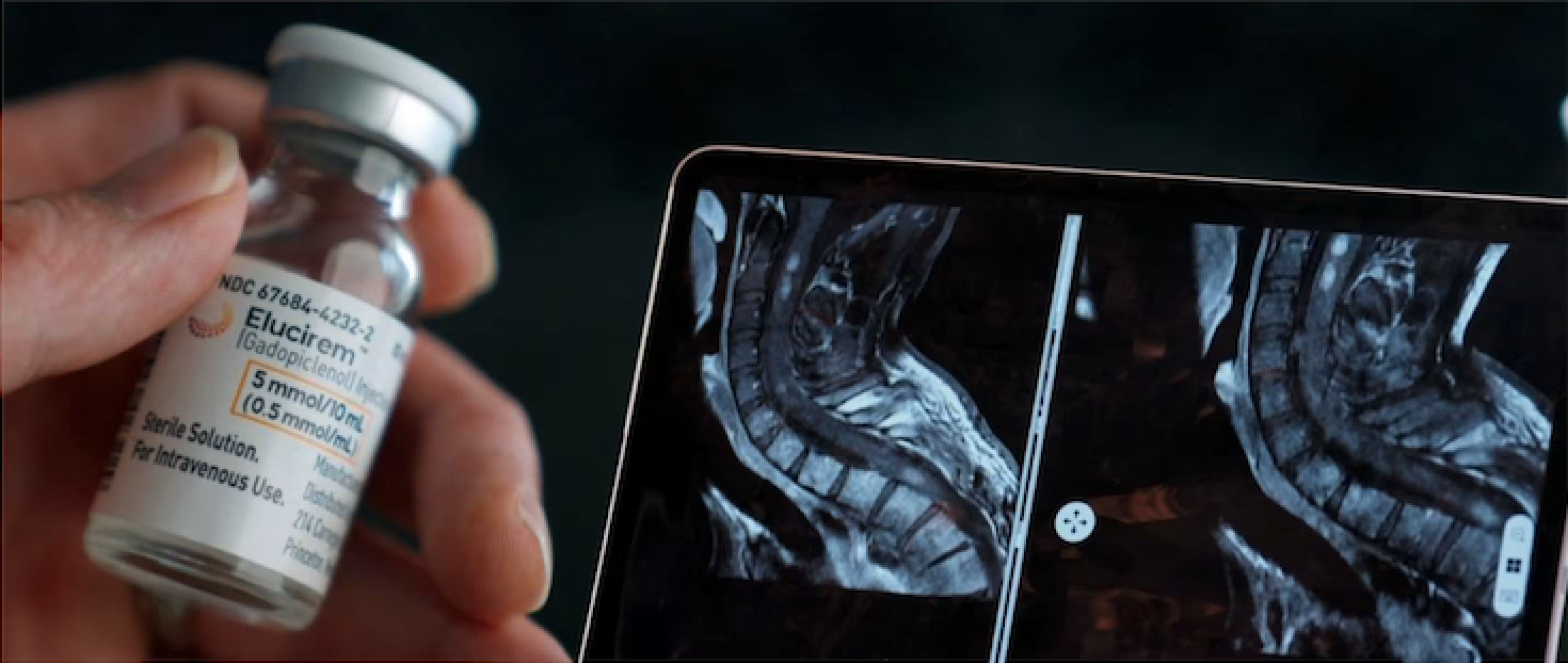
Elucirem™ Receives Indication for Term Neonates
Read the article ↗Image

Living Atlas
Read the article ↗Image

Enhancing Diagnostic Confidence: The Clinical Perspective
Read the article ↗
The Latest from Our Customers
The first thing was just how easy it was to see the contrast for various lesions in the brain and spine. For Elucirem we’ve been using half-dose of the gadolinium. We had been administering 20 CCs by weight and now we’re giving 10 CCs for example.
Image

Carina Yang
MD of UChicago Medicine
Ready to see the difference ELUCIREM can make in your practice?
References
- Elucirem [package insert]. Princeton, NJ: Guerbet LLC; 2026
- Loevner LA, Kolumban B, Hutóczki G, et al. Efficacy and Safety of Gadopiclenol for Contrast-Enhanced MRI of the Central Nervous System: The PICTURE Randomized Clinical Trial. Invest Radiol. 2023;58(5):307-313. doi:10.1097/RLI.0000000000000944
- Kuhl C, Csőszi T, Piskorski W, Miszalski T, Lee JM, Otto PM. Efficacy and Safety of Half-Dose Gadopiclenol versus Full-Dose Gadobutrol for Contrast-enhanced Body MRI. Radiology. 2023;308(1):e222612. doi:10.1148/radiol.222612
ELUCIREMTM (gadopiclenol) injection Important Safety Information
ELUCIREMTM (gadopiclenol) injection Important Safety Information
WARNING: RISK ASSOCIATED WITH INTRATHECAL USE and NEPHROGENIC SYSTEMIC FIBROSIS (NSF)
Risk Associated with Intrathecal Use
Intrathecal administration of gadolinium-based contrast agents (GBCAs) can cause serious adverse reactions including death, coma, encephalopathy, and seizures. ELUCIREM is not approved for intrathecal use.
Nephrogenic Systemic Fibrosis
GBCAs increase the risk for NSF among patients with impaired elimination of the drugs. Avoid use of ELUCIREM in these patients unless the diagnostic information is essential and not available with non-contrasted MRI or other modalities. NSF may result in fatal or debilitating fibrosis affecting the skin, muscle and internal organs.
The risk for NSF appears highest among patients with:
o Chronic, severe kidney disease (GFR <30 mL/min/1.73 m 2 ), or
o Acute kidney injury.
Screen patients for acute kidney injury and other conditions that may reduce renal function. For patients at risk for chronically reduced renal function (for example, age >60 years, hypertension or diabetes), estimate the glomerular filtration rate (GFR) through laboratory testing.
For patients at highest risk for NSF, do not exceed the recommended ELUCIREM dose and allow a sufficient period of time for elimination of the drug from the body prior to any re-administration.
Indications and Usage
Contraindications
Contraindicated in patients with history of hypersensitivity reactions to ELUCIREM.
Warnings and Precautions
- Risk Associated with Intrathecal Use: Intrathecal administration of GBCAs can cause serious adverse reactions
including death, coma, encephalopathy, and seizures. The safety and effectiveness of ELUCIREM have not been
established with intrathecal use. ELUCIREM is not approved for intrathecal use.
- Nephrogenic Systemic Fibrosis: GBCAs increase the risk for NSF among patients with impaired elimination of the
drugs. Avoid use of ELUCIREM among these patients unless the diagnostic information is essential and not available
with non-contrast MRI or other modalities.
- Hypersensitivity Reactions: With GBCAs, serious hypersensitivity reactions have occurred. Before ELUCIREM
administration, assess all patients for any history of a reaction to contrast media, bronchial asthma and/or allergic
disorders.
- Gadolinium Retention: Gadolinium is retained in the body for months or years in several organs. While clinical
consequences of gadolinium retention have not been established in patients with normal renal function, certain
patients might be at higher risk. These include patients requiring multiple lifetime doses, pregnant and pediatric
patients, and patients with inflammatory conditions. Minimize repetitive GBCA imaging studies, particularly closely
spaced studies when possible.
- Acute Kidney Injury: In patients with chronically reduced renal function, acute kidney injury requiring dialysis has
occurred with the use of GBCAs.
- Extravasation and Injection Site Reactions: Injection site pain have been reported in the clinical studies with
ELUCIREM. Extravasation during ELUCIREM administration may result in tissue irritation. Ensure catheter and venous patency before the injection of ELUCIREM.
- Interference with Visualization of Lesions Visible with Non-Contrast MRI: As with any GBCA, ELUCIREM may impair the visualization of lesions seen on non-contrast MRI.
Adverse Reactions:
In clinical trials, the most frequent adverse reactions that occurred in > 0.2% of patients who received ELUCIREM
included: injection site pain, headache, nausea, injection site warmth, injection site coldness, dizziness, localized swelling
and erythema.
Postmarketing Experience with use of ELUCIREM or other GBCAs: Acute pancreatitis, acute respiratory distress
syndrome, pulmonary edema.
Use in Specific Populations
- Pregnancy: GBCAs cross the human placenta and result in fetal exposure.
- Lactation: There are no data on the presence of ELUCIREM in human milk, the effects on the breastfed infant, or
the effects on milk production.
- Pediatric Use: The safety and effectiveness of ELUCIREM for use with MRI to detect and visualize lesions with
abnormal vascularity have been established in pediatric patients including term neonates. The safety of
ELUCIREM has not been established in preterm neonates.
- Geriatric Use: Elucirem is known to be substantially excreted by the kidney, and the risk of adverse reactions
may be greater in patients with impaired renal function.
- Renal Impairment: Avoid use of GBCAs among patients with renal impairment unless the diagnostic information
is essential and not available with non-contrast MRI or other modalities
You are encouraged to report negative side effects of prescription drugs to the FDA. Visit www.fda.gov/medwatch or call 1-800-FDA-1088.
Please see the full Prescribing Information, including the Medication Guide, for additional important safety
information.